Product Overview
| Brand | Dr. Mady |
| Model | 8″ (203 mm) EQ4 Reflector |
| Optical Design | Newtonian reflector |
| Aperture | 203 mm (8″) |
| Focal Length | 800 mm |
| Focal Ratio | f/4 |
| Mount | EQ4 German equatorial |
| Included Eyepieces | PL 6.5 mm & PL 25 mm |
| Finder Scope | 6×30 crosshair finder |
| Barlow Lens | 3× |
| Max Theoretical Mag. | ~369× |
| Tripod/Stand | EQ4 mount on a full tripod |
| Approx. Weight | Total unit ~25 kg |
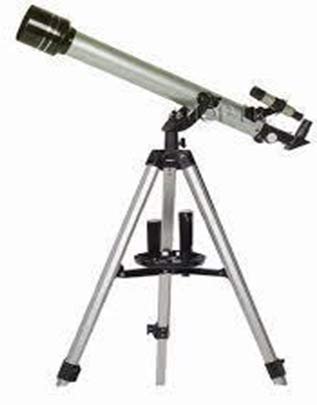
The Dr. Mady 8‑inch EQ‑4 Reflector Telescope is designed for astronomy enthusiasts who crave deeper views of the night sky without a steep learning curve. Featuring a large 203 mm parabolic primary mirror and a sturdy EQ‑4 equatorial mount, this telescope brings bright, high-contrast views of planets, star clusters, nebulae, and moon surfaces into sharp focus. It offers a mix of robust performance and semi-portable convenience, making it ideal for backyard stargazers, astronomy clubs, and budding astrophotographers ready to explore the universe.
1. 203 mm Parabolic Mirror for Deep-Sky Light Gathering
With its large, parabolically shaped 8‑inch mirror, this reflector captures substantially more light than smaller telescopes—resulting in brighter, more detailed views of deep-sky objects like nebulas, galaxies, and globular clusters. Whether you’re peering into Orion’s Nebula or resolving Saturn’s rings, the optical power delivers impressive clarity and contrast for the novice or intermediate astronomer.
2. EQ‑4 German-Style Equatorial Mount with Slow-Motion Knobs
Equipped with a robust EQ‑4 mount, this telescope offers precise right-ascension (RA) and declination (DEC) controls via slow-motion cables. The mount aligns with the Earth’s axis, enabling smooth tracking of celestial objects as stars drift across the sky. Ideal for manual tracking and long-exposure astrophotography—especially useful for capturing fine details without requiring electronics.
3. Dual Eyepieces (25 mm & 10 mm)
This telescope includes two Huygens-style eyepieces: a 25 mm, giving a wide 32× view, and a 10 mm, offering a detailed 80× view. These options offer a great balance—wide, immersive skies for deep-sky scanning and higher magnification for planetary or lunar detail. Additional eyepieces can be added as your astronomy skills grow.
4. Red Dot Finder & 6×30 Optical Finderscope
The built-in red-dot finder makes alignment quick and easy for beginners, while the optical 6×30 finder allows slightly more precise star-targeting as skill grows. Together, these tools help you locate and track celestial objects with confidence—even without experience using star charts.
5. Heavy-Duty Steel Tripod and Accessory Tray
The included steel tripod ensures a firm, wobble-free base—crucial when observing at high magnification. A convenient accessory tray adds storage space for eyepieces, filters, and notes. Despite its solid build, the rig remains semi-portable enough to move between balcony, backyard, or darker sky spots.
1. Go Deeper in the Night Sky
With its 8‑inch mirror, this telescope lets you explore targets you could never reach with smaller scopes—open clusters, distant galaxies, and intricate nebulae become accessible and stunning.
2. Mount That Grows with Your Skills
The equatorial mount offers both manual and semi-advanced tracking, perfect for learning the sky and improving your astrophotography without needing full automation.
3. Smooth Viewing, Even at High Magnifications
The slow-motion declination and RA controls mean smoother tracking and sharper views—no more manual nudges or shaky images.
4. Setup Made Simple and Educational
From star-hopping beginners to night-sky students, the included red-dot and optical finders make locating objects easy, while the dual eyepieces offer fast gratification and room to grow.
5. Built for Nights Under the Stars
Robust, reliable, and semi-portable—this model is ready for frequent backyard use, club events, or trips to darker observing sites without sacrificing performance.
1. Assemble Without Tools
Mount the sturdy 203 mm × 800 mm Newtonian reflector tube onto the EQ4 German equatorial mount using the dovetail bracket. Attach the steel-altitude tripod and securely tighten the safety knobs—no tools needed for fast setup.
2. Align the 6×30 Finderscope
During daylight, aim at a distant object (e.g., a building). Center it in the main eyepiece, then adjust the angle and position of the finderscope so its crosshair aligns, ensuring accurate nighttime aiming.
3. Choose Eyepieces & Barlow
The kit includes 25 mm (32×) and 6.5 mm (123×) Plössl eyepieces; add the 3× Barlow to triple magnification (up to 369×). A 1.5× erecting eyepiece enables terrestrial/object viewing.
4. Focus Using the Rack-and-Pinion Focuser
Turn the focus knob until celestial targets—like nebulae, galaxies, or lunar craters—appear sharp. Fine-tuning is essential for optimal clarity.
5. Track Precisely with Setting Circles
Use the RA and DEC slow-motion knobs, along with the setting circles, to manually track objects as Earth rotates. This makes locating and following deep-sky targets simple.
1. Keep Optics Dust-Free
Before cleaning, use a soft blower. Wipe off remaining dust with a microfiber cloth. Avoid touching mirrors with fingers or using harsh chemicals, which can damage coatings.
2. Protect from Moisture & Dew
Though sturdy, the telescope isn’t sealed. After use in high humidity or dew, dry it completely before placing it in the storage case to avoid fungal growth and corrosion.
3. Store Safely in a Dry Place
Disassemble the tube, eyepieces, and accessories, then store them in a dry, temperature-stable space. Keep the tripod indoors to maintain its integrity and avoid rust.
4. Monitor Mount Alignment Regularly
Ensure all mounting screws and knobs are snug. Check and adjust collimation each season or after transport to maintain image quality.
5. Handle the Focuser with Care
Don’t overtighten the rack-and-pinion knobs. Rough handling can misalign mirrors and degrade focus accuracy.
1. Never Observe the Sun
Look at the Sun only with a certified solar filter fitted to the front end—not through the eyepiece. Exposure without protection can cause permanent eye and telescope damage.
2. Use on Stable, Level Surfaces
Place the telescope on flat ground. Avoid observing on sloped or uneven terrain to prevent tipping or mount instability.
3. Supervise While in Use
This is a precision instrument—keep children and pets at a safe distance to avoid accidental bumps or misalignment.
4. Avoid Tampering with Components
Do not open the optical tube, adjust mirror alignment, or disassemble the mount without proper knowledge—it can permanently damage optical components.
5. Don’t Use in Harsh Weather
Avoid using the telescope during strong winds, rain, or dusty conditions. These can impair optics and compromise mount stability; always dry and re-collimate after exposure.
The Dr. Mady 8″ (203 mm) EQ4 Reflector Telescope is a powerhouse for deep-sky observation and beginner astrophotography. Featuring fully coated 203 mm optics for superior brightness and contrast, it combines high magnification (up to 369× with included eyepieces and Barlow), German equatorial tracking, and precise mount controls for accurate navigation. Weighing ~25 kg and supported by a solid tripod, this telescope is ideal for viewing galaxies, nebulae, star clusters, and lunar details. With all key accessories—eyepieces, Barlow, finder, erecting eyepiece, moon filter, and setting circles—included, it’s a complete setup offering excellent performance and value for amateur astronomers.
With its large 203 mm parabolic mirror and f/4 focal ratio, this telescope delivers bright, high-contrast views of the Moon’s craters and mountains, Saturn’s rings, Jupiter’s cloud bands and moons, as well as deep-sky objects like the Orion Nebula, star clusters, and brighter galaxies. The included 25 mm and 6.5 mm Plössl eyepieces plus 3× Barlow give you a practical magnification range from about 32× up to theoretical 369× (limited by atmospheric seeing).
Yes. The EQ4 German equatorial mount features slow-motion controls for both Right Ascension (RA) and Declination (DEC), plus setting circles. Once polar-aligned, it lets you smoothly track objects as the Earth rotates—ideal for learning the sky and even basic long-exposure astrophotography without needing motors or electronics.
The full assembly (optical tube + EQ4 mount + steel tripod) weighs approximately 25 kg. It is semi-portable: sturdy enough for backyard or club use, yet manageable to move to a balcony, terrace, or darker observing site. The tool-free dovetail attachment makes assembly and disassembly straightforward.
You receive:
(Note: Some product descriptions also mention a red-dot finder and moon filter as part of the complete kit—confirm current packaging at the time of order.)
Like all Newtonian reflectors, occasional collimation (alignment of the primary and secondary mirrors) is required for the sharpest images. Check and adjust collimation after transport or roughly once per observing season. The process is straightforward with simple tools and improves with practice; many users find it becomes quick routine.
It is suitable for beginner to intermediate visual observing and entry-level astrophotography. The EQ4 mount’s smooth tracking and slow-motion controls allow short-exposure planetary and lunar imaging or basic deep-sky shots with a smartphone or DSLR (via appropriate adapters, sold separately). For advanced long-exposure work, adding a motor drive later is a common upgrade path.
Safety: Never point the telescope at the Sun without a proper full-aperture solar filter—serious eye damage can result. Always set it up on level ground and supervise children.
Maintenance: Keep optics dust-free with a blower and soft microfiber cloth. Store the tube and accessories in a dry place to prevent dew and fungus. Avoid overtightening the focuser or mount knobs. With basic care, the telescope will deliver years of clear views.
| Specification | Details |
|---|---|
| Brand & Model | Dr. Mady 8″ (203 mm) EQ4-Mounted Newtonian Reflector Telescope |
| Optical Design | Newtonian reflector with parabolic primary mirror |
| Aperture | 203 mm (8″) |
| Focal Length / Ratio | 800 mm, f/4 |
| Mount | EQ4 German Equatorial mount with setting circles and slow-motion controls |
| Eyepieces Included | Plössl 25 mm (~32×), Plössl 6.5 mm (~123×) |
| Finder Scope | 6×30 crosshair finder |
| Barlow Lens | 3× Barlow lens included |
| High-End Mag. Capability | Up to ~369× theoretical magnification (seeing-limited practical max) |
| Tripod/Stand | Sturdy steel/aluminum tripod with accessory tray |
| Weight (Total) | Approx. 25 kg (telescope + mount + tripod) |
| Use Applications | Deep-sky objects (nebulae, galaxies), planetary viewing, astrophotography setup |
| Accessories | Includes eyepieces, Barlow, finder, tripod, accessory tray, instruction manual |




Reviews
There are no reviews yet.